
Too Grown, Too Soon
There are some experiences you do not always have the language for while they are happening.At first, you only know how they feel.You remember being expected to be mature before you were ready. You remember being told you were “too grown,” “too much,” “too sensitive,” or that you should have known better. You remember learning how to read the room early, how to manage your tone, how to hold back tears, how to make yourself smaller, quieter, easier to understand. You may have been praised for being responsible, while quietly wishing someone would notice that you were still just a child.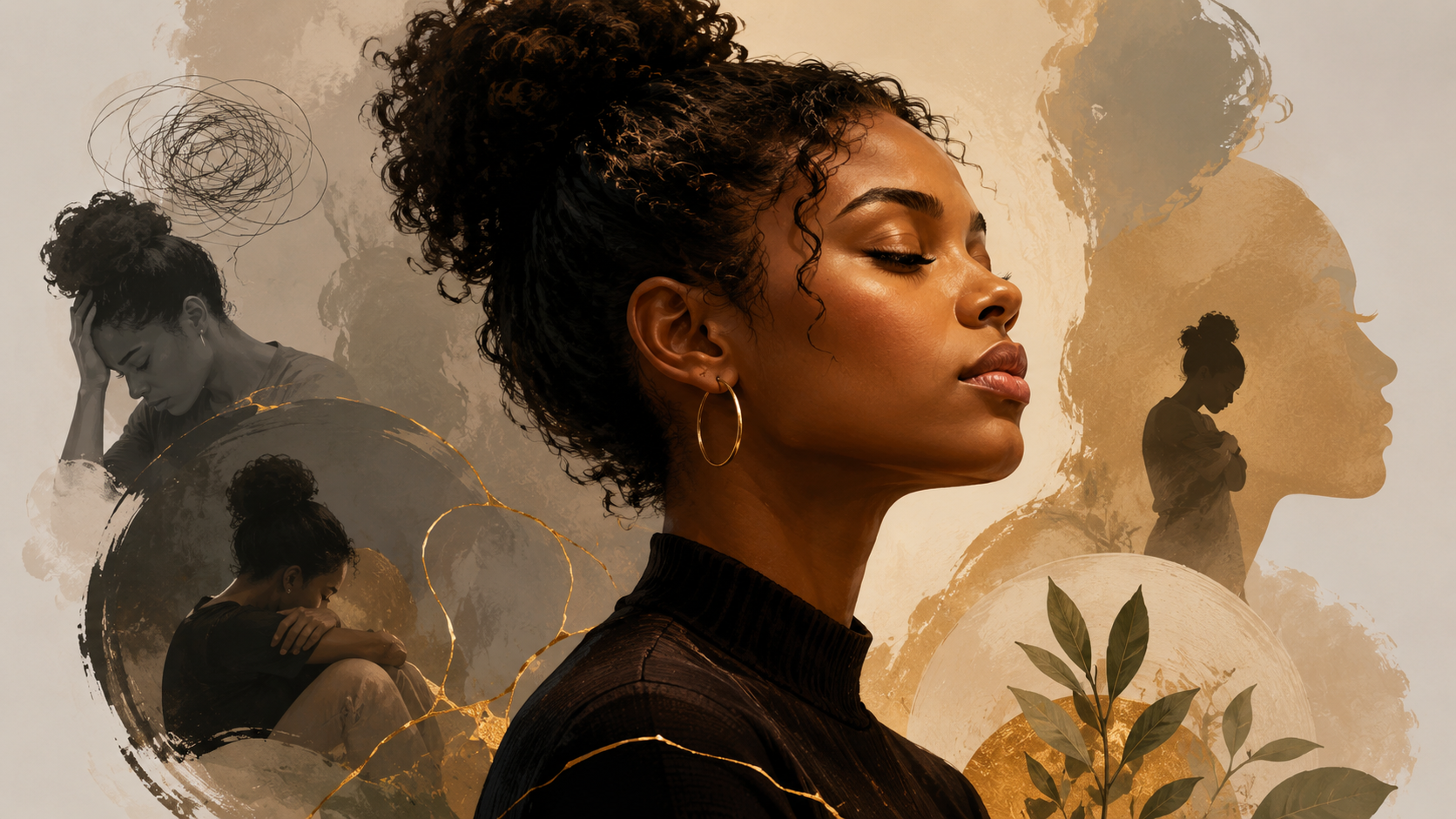
For many Black girls, this experience is not unfamiliar.It can look like being treated as older than you are. It can sound like adults expecting emotional control before you have even had the chance to understand your own emotions. It can feel like carrying responsibility, pressure, judgment, and expectation long before you had the words to name what was happening.This is part of what is known as the adultification bias.The adultification bias is the tendency to see Black girls as older, less innocent, more mature, more responsible, and less in need of protection than their peers. It is not always loud. It is not always obvious. Sometimes, it shows up in small moments: being corrected more harshly, being assumed to have an attitude, being expected to handle adult emotions, or being denied the patience and softness so often given to other children.And over time, those moments can begin to shape how Black girls see themselves.They can shape how safe they feel expressing emotions. They can shape how much permission they believe they have to rest, cry, make mistakes, ask for help, or simply be held.Childhood is supposed to be a time of discovery. A time for mistakes. A time for play, curiosity, softness, guidance, and protection. Children are supposed to be allowed to not know yet. They are supposed to be allowed to need support.But for many Black girls, childhood is interrupted by expectations that arrive too soon.They are expected to be strong before they are comforted. Mature before they are understood. Responsible before they are protected. Composed before anyone asks what hurts.A Black girl’s frustration may be labelled as disrespect. Her confidence may be seen as defiance. Her sadness may be ignored. Her silence may be praised. Her survival may be mistaken for wellness.This is one of the quiet harms of the adultification bias. It does not only change how others see Black girls. It can also change how Black girls learn to see themselves.They may begin to believe that their emotions are dangerous. That their needs are too much. That their vulnerability will not be met with care. That being strong is the only way to be accepted.And so, they adapt.They become the helper. The responsible one. The one who does not complain. The one who figures it out. The one who knows how to keep going.But sometimes, beneath that strength, there is a little girl who was never asked, “Are you okay?”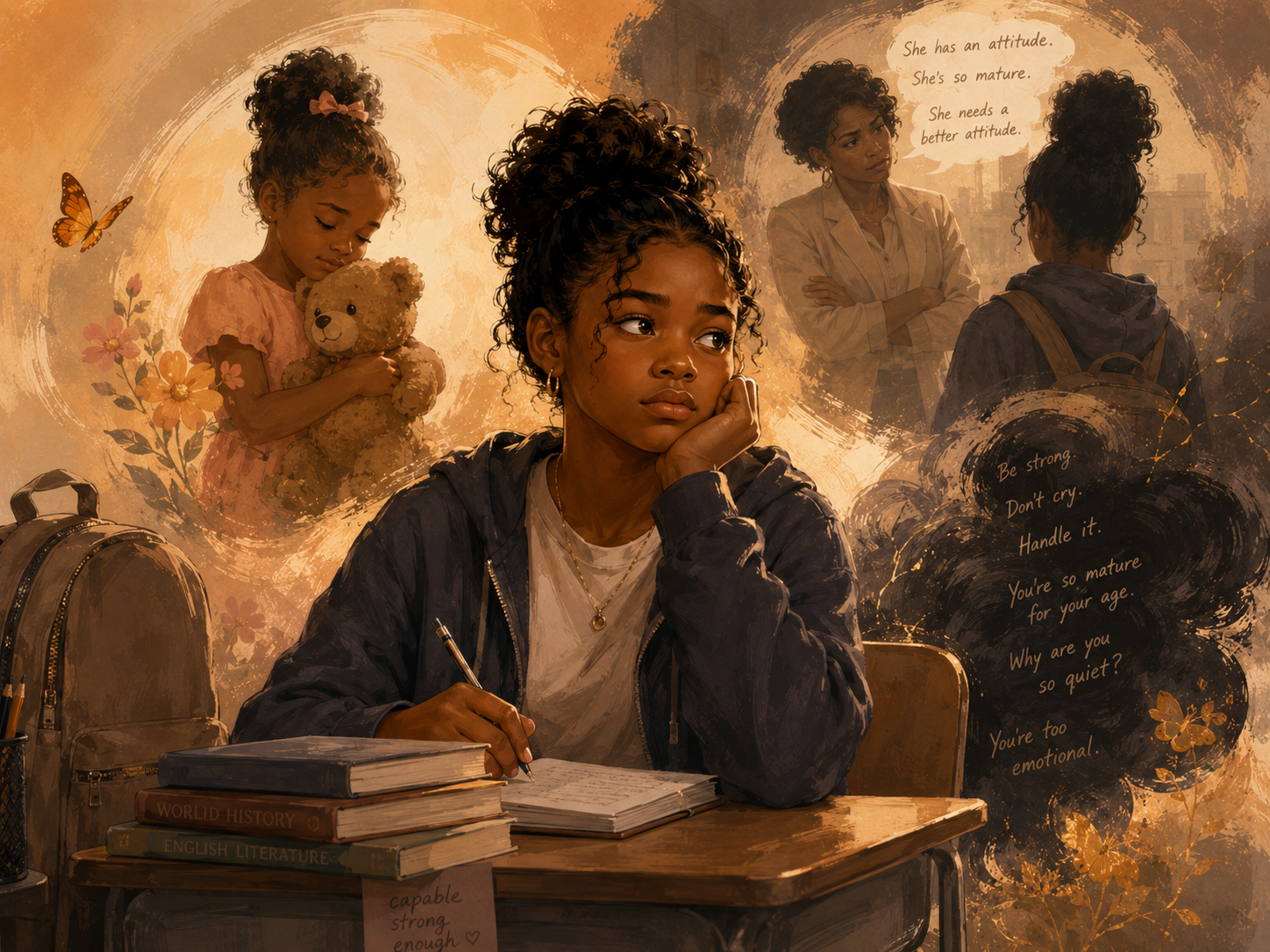
This harm often shows up in the very places where Black girls should be protected the most. In schools, Black girls are more likely to be disciplined harshly for behaviours that may be seen as age appropriate in other children. Their emotions are often misread. Their frustration may be seen as aggression. Their assertiveness may be seen as disrespect. Their distress may be treated as a behaviour problem instead of a sign that something deeper is happening.Instead of receiving curiosity, they may receive punishment.Instead of being asked what they need, they may be told to calm down, behave, or know better.And that matters deeply, because school is not only a place where children learn academics. It is also a place where children learn who they are. They learn whether their voice matters. They learn whether adults can be trusted. They learn whether they are allowed to make mistakes and still be worthy of care.When Black girls are repeatedly misunderstood, overcorrected, or punished, they may begin to internalize the message that they are not safe being fully themselves.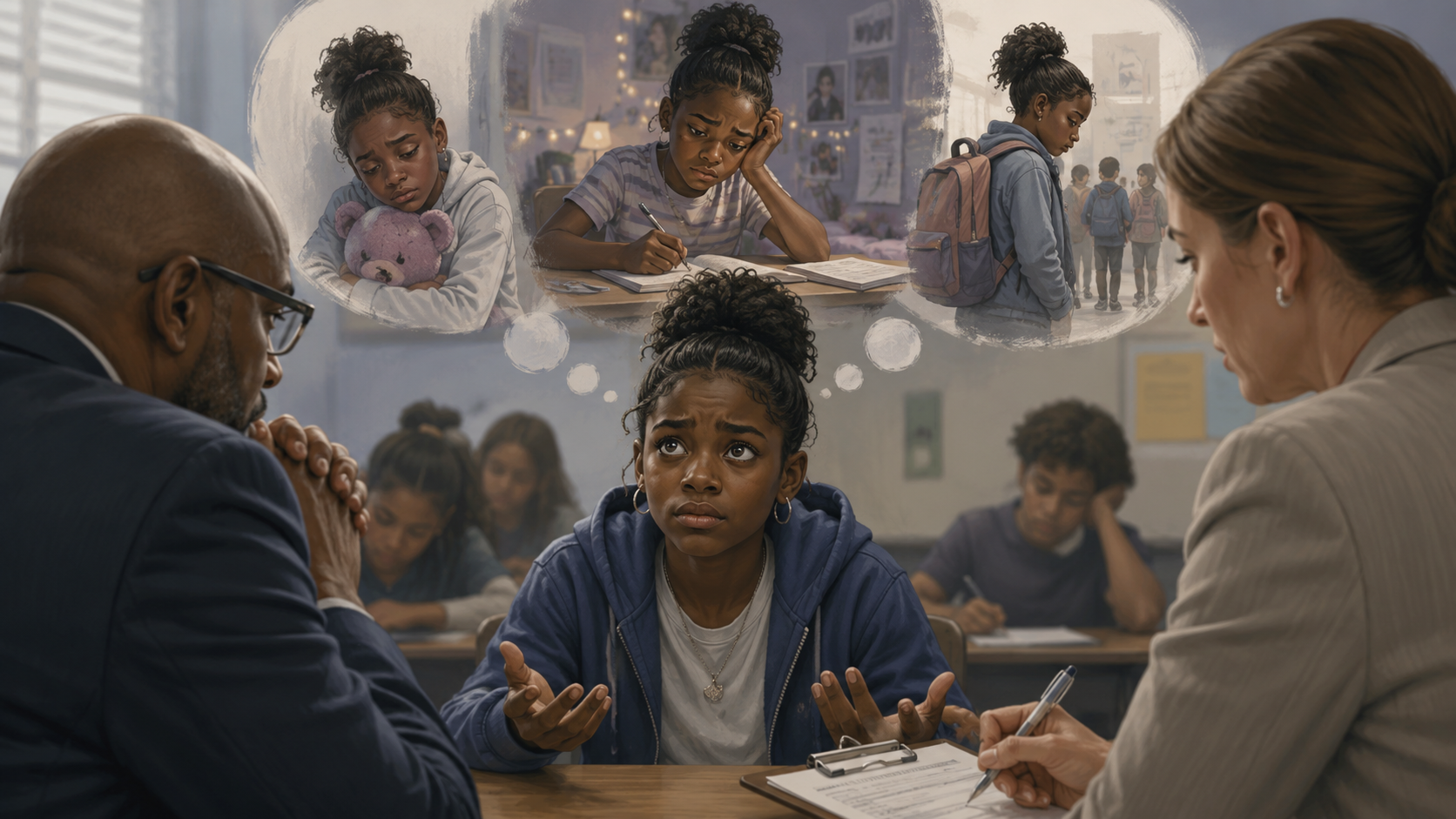
But this does not only happen in classrooms. It can happen in families, healthcare settings, social spaces, workplaces, and even therapy rooms. It can happen anywhere Black girls and women are expected to be strong, composed, and self-sufficient at the expense of their emotional truth.And the truth is, there is nothing wrong with strength.Strength has carried many Black women through impossible circumstances. Strength has helped families survive, communities organize, and generations keep going. Strength can be beautiful. It can be sacred. It can be a source of pride.But strength becomes heavy when it is the only thing people allow you to be.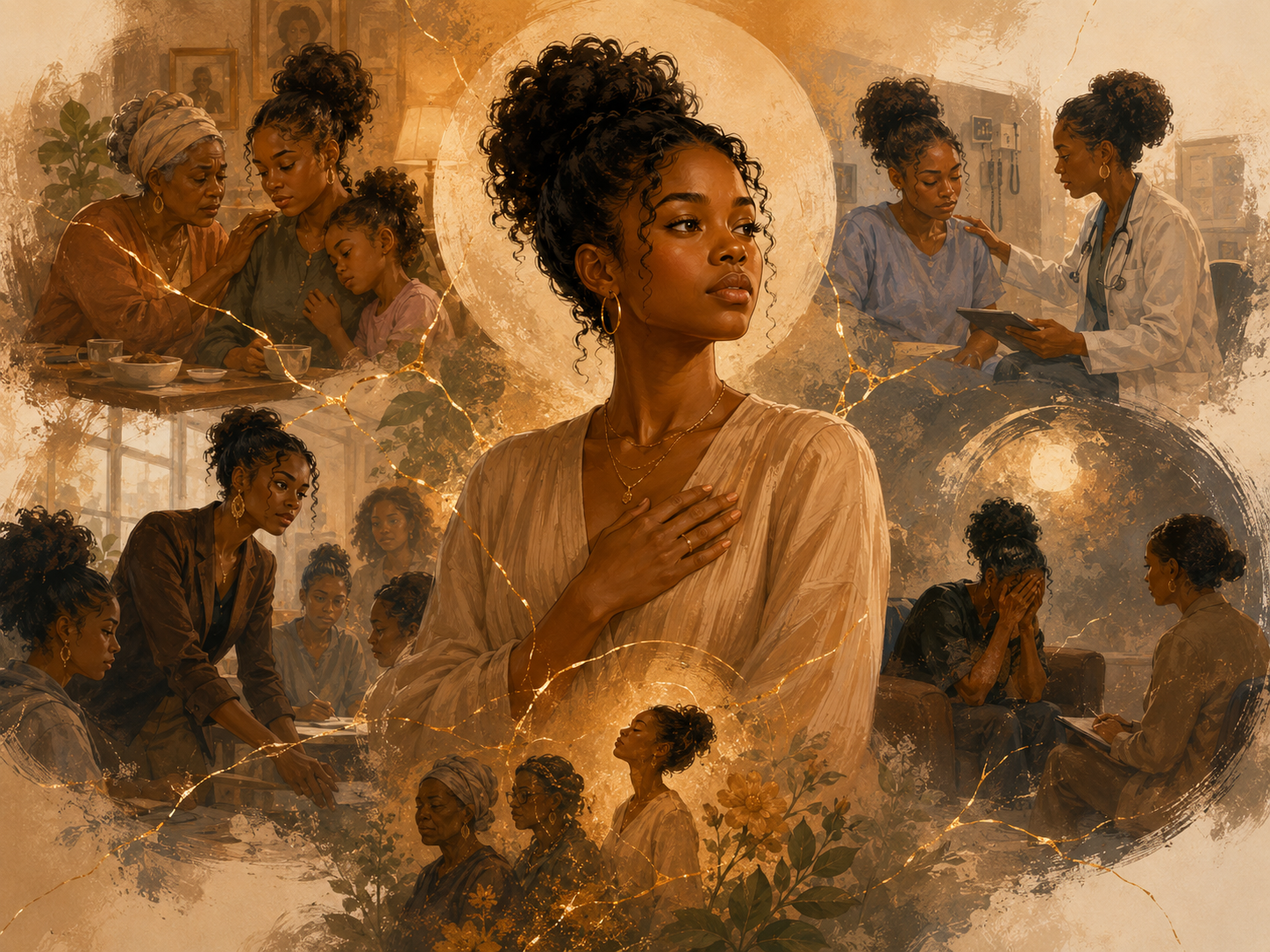
Many Black women know what it feels like to be seen as capable but not cared for. Needed but not nurtured. Admired but not checked on. Praised for resilience but rarely offered rest.The expectation of the “Strong Black Woman” often begins in girlhood. It begins when Black girls are taught, directly or indirectly, that crying is weakness, anger is dangerous, softness is unsafe, and needing help is inconvenient.Over time, this can lead to emotional suppression. It can make vulnerability feel unfamiliar or even threatening. It can make rest feel undeserved. It can make asking for help feel like failure.And eventually, the body and mind may begin to carry what the heart was never allowed to express.Anxiety.Depression.Chronic stress.Exhaustion.Hypervigilance.Difficulty trusting others.Difficulty receiving care.Feeling responsible for everyone while silently wondering who is responsible for you.This is why the adultification bias is not only a childhood issue. It is a mental health issue. It is a relational issue. It is a generational issue. It follows many Black women into adulthood, shaping how they love, work, parent, cope, and heal.One of the deepest wounds of the adultification bias is emotional misrecognition.To be misrecognized is not just to be misunderstood once. It is to repeatedly have your emotions interpreted through someone else’s bias.A Black girl may be afraid, but others see attitude.She may be overwhelmed, but others see disrespect.She may be grieving, but others see anger.She may be asking for help in the only way she knows how, but others see a problem to control.When this happens over and over again, it teaches a painful lesson: your emotions are not safe here.So many Black girls learn to edit themselves. They monitor their faces, their voices, their body language, their reactions. They learn how to appear calm even when they are hurting. They learn how to be acceptable instead of authentic.That kind of emotional labour is exhausting.And for many Black women, it does not end when childhood ends. It continues in workplaces where they feel they cannot show frustration without being labelled difficult. In relationships where they feel pressure to be low-maintenance. In therapy spaces where they fear being misunderstood. In everyday life, where they may feel they must constantly prove they are not angry, aggressive, or too much.But Black girls and women deserve more than emotional survival.They deserve emotional freedom.They deserve the right to be sad without being dismissed. Angry without being demonized. Confused without being judged. Soft without being underestimated. Vulnerable without being punished.Part of the pain of the adultification bias is that many people experience it long before they have the words to describe it.Sometimes, you only realize later that something was taken from you.The chance to be carefree.The chance to be protected.The chance to make mistakes without shame.The chance to be comforted before being corrected.The chance to be a child.Naming the adultification bias can be powerful because it allows people to understand that what happened was not simply personal. It was not because they were too emotional, too difficult, too sensitive, or too much.It was part of a larger pattern.A pattern shaped by racism, sexism, history, and social expectations. A pattern that has denied Black girls the innocence, patience, and care they have always deserved.And once something is named, it can begin to be challenged.Healing may involve returning to the parts of yourself that had to grow up too soon. It may involve learning that softness is not weakness. That rest is not laziness. That asking for help is not failure. That your emotions are not a burden.It may involve grieving the childhood you did not fully get to have.It may involve learning how to trust safe people.It may involve therapy, spirituality, community, creativity, storytelling, sisterhood, mentorship, or simply being in spaces where you no longer have to explain your humanity.Healing does not mean pretending the harm did not happen. It means giving yourself permission to be cared for now.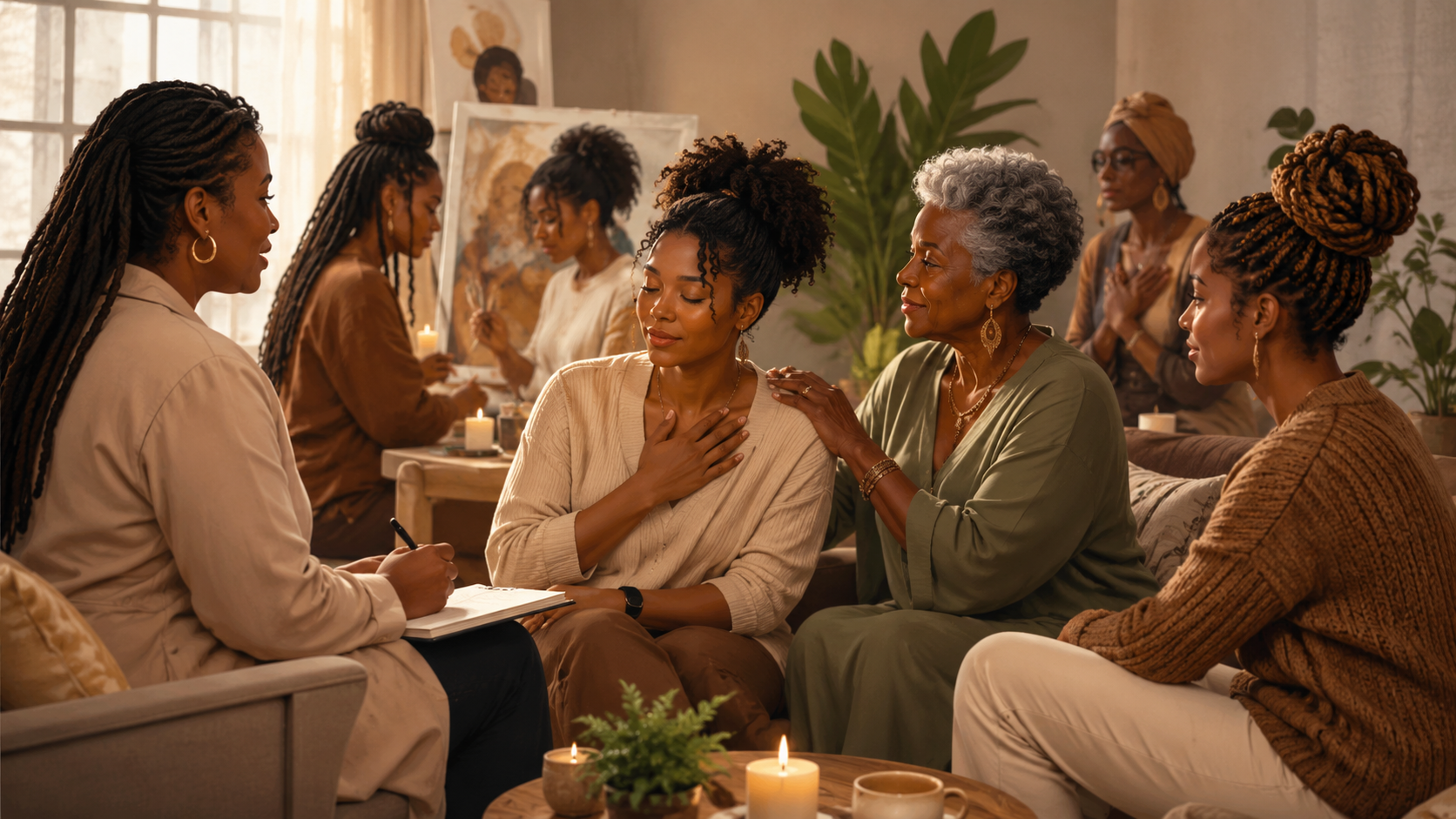
For educators, therapists, caregivers, and community members, challenging the adultification bias begins with slowing down.Before correcting a Black girl, ask what might be underneath the behaviour.Before labelling her as disrespectful, ask whether she is overwhelmed.Before praising her for being mature, ask whether she has had room to be a child.Before assuming she is strong enough to handle it, ask whether she has been supported.Support looks like listening without rushing to discipline. It looks like allowing Black girls to have full emotional lives. It looks like creating classrooms, homes, therapy rooms, and communities where Black girls are not punished for needing care.For therapists and helping professionals, this also means practicing cultural humility. It means recognizing that Black girls and women may enter therapeutic spaces carrying histories of being misread, dismissed, or overburdened. It means not mistaking guardedness for resistance. It means not assuming that strength means the absence of pain.It means creating spaces where Black women can exhale.Where they do not have to perform.Where they can be angry, tired, tender, uncertain, joyful, grieving, hopeful, and whole.One of the most important truths we can hold is this:Black girls should not have to be strong to be valued.They should not have to be mature to be respected.They should not have to be useful to be loved.They should not have to suppress their emotions to be safe.They deserve to be protected simply because they are children. They deserve gentleness without having to earn it. They deserve correction that does not shame them. They deserve adults who are curious about their pain instead of afraid of their expression.And Black women, the girls who grew up too soon, deserve that same tenderness now.They deserve relationships where they can lay their burdens down.They deserve care that does not require performance.They deserve rest that does not need justification.They deserve healing that honours both their pain and their power.The adultification bias teaches Black girls that they must grow up quickly to survive.But survival should never be the standard for childhood.Black girls deserve more than survival. They deserve softness, joy, guidance, protection, play, emotional safety, and room to become. They deserve to be seen not as miniature adults, not as problems to manage, and not as symbols of strength, but as whole human beings with needs, dreams, fears, and feelings.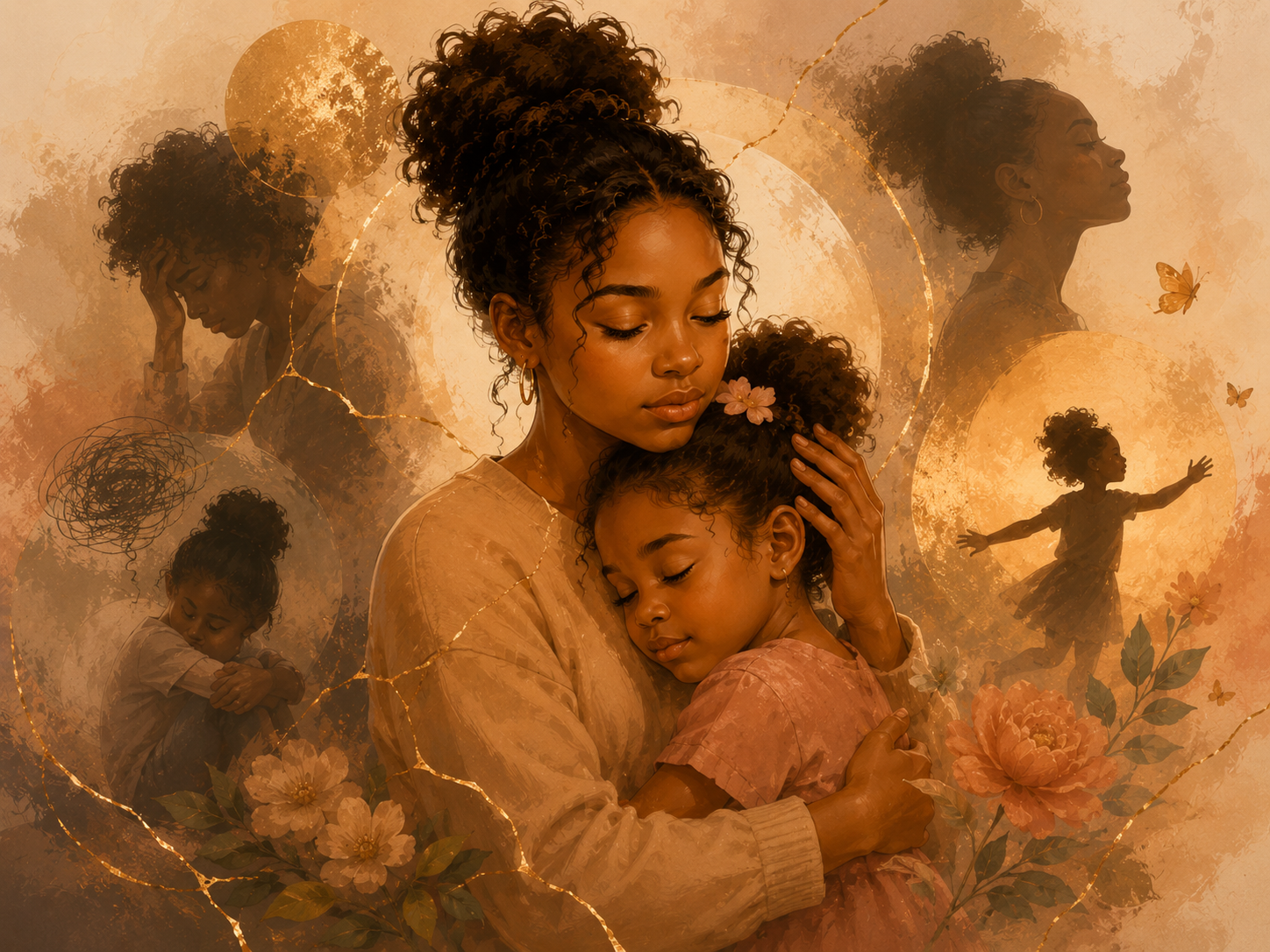
And for the Black women who were once those girls, this is an invitation to return to yourself with compassion.To the parts of you that had to be strong too soon.To the parts of you that learned to stay quiet.To the parts of you that still find it hard to ask for help.To the parts of you that deserved more care than you received.You are allowed to rest now.You are allowed to be soft now.You are allowed to be supported now.You were never too much.You were a child.And you deserved to be held.With care,
Anne Duré